
CASE STUDY > BALCO

Training people for emergencies that are successfully prevented
Pot blasts, pot leakages, and open circuit events are among the most dangerous emergencies in aluminium smelting. BALCO hadn’t faced these scenarios in over two decades.
They had to train their workforce to handle these scenarios without simulating the events in real life.
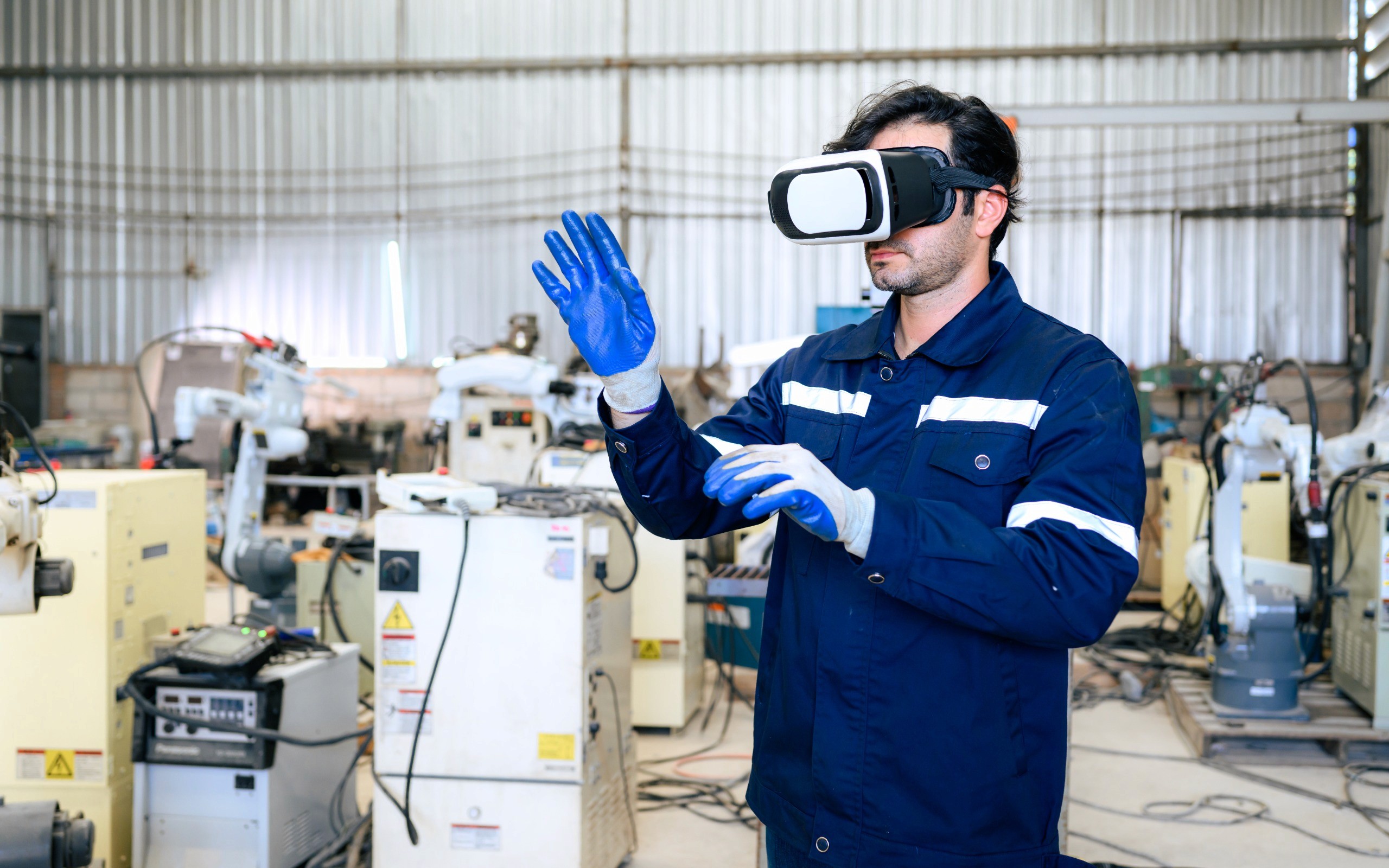
AutoVRse developed 3 VR training modules replicating BALCO's emergency SOPs.
Inside a realistic recreation of the plant environment, workers get guided through the correct emergency response procedures step by step.
A workforce that can deal with the unexpected
BALCO trained both its workforce and contract workforce on these critical modules.
The results show a 99.6% pass rate in over 9 months of active deployment, indicating a workforce that has internalized emergency response procedures.
Ability to train for high-consequence scenarios
Potline emergencies are too dangerous to simulate on the plant floor. AutoVRse's VR training modules simulate these events in an accurate replica of BALCO’s exact plant environment and guide workers through their precise SOPs.
Training that fits within shift schedules
A continuously operating smelter cannot stop for long training sessions. AutoVRse’s VR modules averaged around 13 minutes while covering every step. Thus, the training could be scheduled without disrupting anyone’s shift.
Measurable outcomes that demonstrate competency
AutoVRse's modules featured assessments that evaluated each worker’s knowledge competency. Additional metrics like pass rates, session data, and completion rates give BALCO's team visibility into training efficacy.
Designed with accessibility in mind
AutoVRse designed the modules with simple, intuitive interactions. Hence, even workers with zero prior VR experience could engage with the training material without requiring extensive technical onboarding.
Challenge: Preparing the workforce for emergencies that can’t be practiced in real life
The potline is at the core of an aluminium smelting operation. It is also one of the most dangerous environments in heavy industry.
Workers at BALCO's Korba facility do their daily work, close to molten aluminium. The temperature of the molten aluminum nearby can be upward of 900°C.
A lapse can turn into a catastrophe. One that’ll leave workers injured, have costly equipment damaged, and halt production for an uncertain duration. Thankfully, BALCO’s continuous safety initiatives have made these events rare.
However, the rarity also creates a problem: new workers who haven’t experienced these dangers don’t know how to respond if they do happen. Since the risk is so high, new workers must be properly prepared to identify and respond to potline emergencies.
This requires repeated practice. For this, BALCO required a training solution that:
Simulates high-consequence emergencies without any actual danger
Trains both permanent staff and contract workers on the same standards
Allows tracking and verifying that every worker is prepared to deal with emergencies
Solution: Turning emergency response protocols into immersive VR training
BALCO reached out to AutoVRse as part of their proactive approach towards safety culture. They wanted to understand how they could utilize VR as a medium for training to uphold their safety standards.
Both of our teams unanimously selected 3 high-risk scenarios to tackle first:
Pot Leakage: training workers to identify, respond to, and contain a molten aluminium leakage event
Pot Blast: preparing workers for the most catastrophic potline emergency, including evacuation and other immediate response procedures
Open Circuit: training workers to recognize and respond to electrical open circuit events on the potline
AutoVRse’s LxD team scripted each learning module around BALCO's existing emergency response protocols.

Our artists recreated BALCO’s Korba facility in VR. The art team maintained a high level of accuracy and detail, so workers trained in the VR modules thoroughly understand their plant environment. In case of an emergency in the real world, it’ll help them respond right away rather than having to adapt what they’ve learned to a different environment.
AutoVRse’s development team implemented simple, intuitive interactions. They wanted the training modules to be accessible to everyone—including those with limited familiarity with technology.

Each module ends with a scored assessment. So, BALCO’s team receives a clear picture of their workforce readiness, any time they want, backed by data.

Results: A workforce that knows what to do when it matters most
Since the deployment in July 2025, results from VR training have become additional proof of BALCO’s core belief: implementing structured, rigorous training is how you prepare workers for emergencies.
The metrics on performance reveal a deployment story of knowledge retention:
99.6% pass rate across all assessments
92.5% average score combined across both workforces
89% of BALCO users completed all modules
There is no variance in these metrics between BALCO's permanent workforce and its contractor personnel. Everyone is trained to the same standard.
The training fits within BALCO’s shift schedules, as each module runs to an average of just 13 minutes.
Future: Scaling a VR-powered safety-first culture across the Vedanta Group
The current deployment at BALCO is just the starting point.
AutoVRse is currently in discussions with Vedanta (the parent company of BALCO) for a 50-module VR training rollout. This deployment would take the VR-led safety culture at BALCO and extend it across one of India's largest industrial conglomerates.
The success of the BALCO deployment has also led to new partnerships. NGSL reached out to AutoVRse on the strength of the BALCO results. Currently, 5 VR safety modules are in development for NGSL. These include:
Fire Safety
Electrical Safety
Confined Spaces
Work at Height
Driver Safety
For BALCO, this isn’t just a technology project. It’s the next step in their commitment to safety. It’s part of their decades-long focus on maintaining a safety culture.
With BALCO, AutoVRse’s mission is to achieve zero safety incidents. That means no worker who has undergone VR training is involved in a safety incident.
Zero accidents. Zero injuries. Zero lives lost.