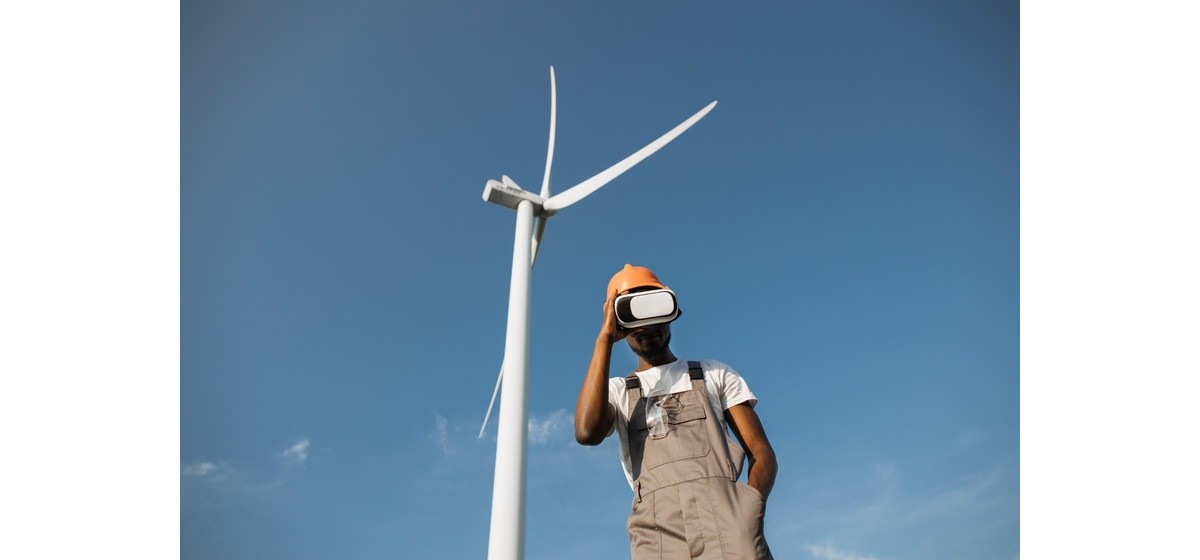
In the utilities sector, field duties come with considerable risks, such as inspections, equipment checks, and quick fixes for outages. When systems fail, many customers can be without service, and errors during upkeep can cause serious accidents. AR VR applications in Power and Utilities help reduce errors, improve response times, and strengthen operational continuity.
AR for Real-Time Maintenance Guidance and Inspections
Augmented reality enables technicians to view digital overlays on physical equipment such as transformers, circuit breakers, and switchgear panels. AR smart glasses can display wiring diagrams, torque specifications, and hazard alerts directly on the asset being serviced. These AR VR applications for Utilities reduce reliance on printed manuals and minimize procedural errors.
Remote expert collaboration further enhances maintenance workflows. A field technician wearing AR-enabled glasses can share a live feed with a senior engineer at headquarters, enabling guided troubleshooting without dispatching additional personnel. Many organizations exploring structured AR deployment models evaluate practical ar use cases before scaling across transmission and distribution teams.
By embedding compliance prompts and inspection checklists within the technician’s view, AR VR applications for Power sector maintenance teams improve first-time fix rates and reduce unplanned downtime.
VR for Simulating Substations, Plants, and Grid Environments
Virtual reality allows utility companies to build digital versions of places like substations, hydroelectric plants, power generators, and control rooms. Workers can then use training simulations to practice how to change between sequences, follow safety steps, and perform emergency shutdowns. These XR in Power and Utilities deployments replicate spatial layouts with high fidelity.
Errors in high-voltage switching can lead to arc flashes and serious injuries. Practicing with VR lets technicians repeat key steps in a safe setting. Organizations studying advanced virtual reality examples often identify substation simulation as a high-impact use case.
By simulating storm response, grid overload conditions, and equipment failure scenarios, AR VR applications in Power and Utilities improve preparedness without disrupting live operations.
Mixed Reality for Asset Familiarization Before Site Visits
Mixed reality combines visual immersion with real-world awareness. New technicians can explore a digital copy of a restricted high-voltage zone before entering it, allowing them to grasp the layout, hazard areas, and placement of tools. Preparation lessens mental strain during actual work.
Contractors and third-party teams also benefit from asset walkthroughs that standardize orientation procedures. XR in Power and Utilities enables faster onboarding for large infrastructure projects such as new substations or renewable energy farms.
By combining AR overlays and VR simulations, AR VR applications for Utilities improve operational precision while reducing risk exposure during field tasks.