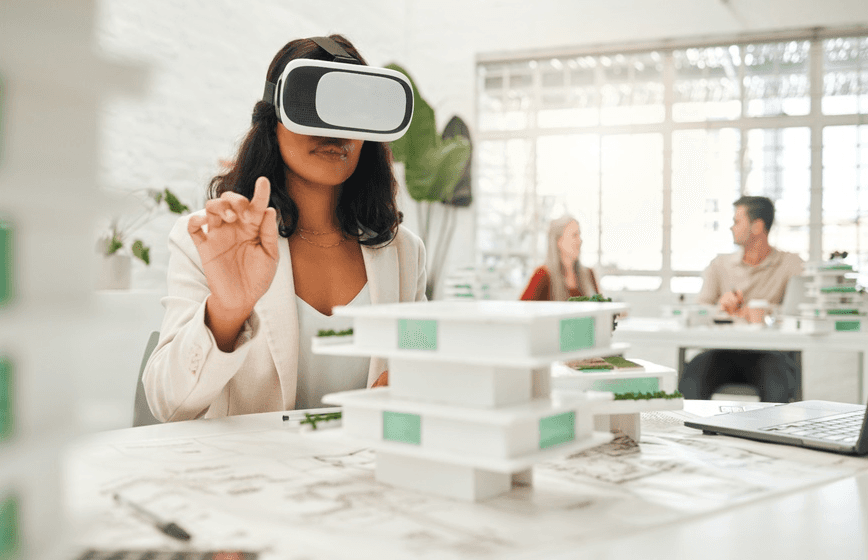
The examples of virtual reality today go far beyond gaming emphasising the developments in VR. In 2026, many different companies are using VR to change how people learn, work together, and do their jobs. Businesses are putting money into VR systems for things like training and design reviews, hoping to get better results and keep employees interested. This blog will look at some of the most important ways VR is being used in business now and why it has become so important for changing how companies use tech.
What Is Virtual Reality?
Virtual Reality gives you an experience inside a computer-generated world. These worlds can be like reality, or something totally made up. With devices like the Meta Quest 3 and Pico 4 Enterprise, you can walk around and explore these 3D places. You can also grab and touch things using controllers or just your hands. VR content is usually in the form of interactive simulations made with CGI.
Current VR systems use 6DoF to track movement, so people can move as they would in the real world inside virtual spaces. This is unlike older 3DoF systems. The difference between these approaches changes the user experience and how deep the training can go.
VR lets people train for real jobs, work together from different places, and see complicated setups in an easy way. It's a safe virtual space where they can get better at understanding things and doing their jobs well.
Why Are Organizations Investing in VR Now?
There are many examples of virtual reality that show that it has grown a lot lately - it's not just for testing anymore; big companies are using it. As the equipment gets less expensive and easier to get through the Internet, more groups are adding VR to how they train people, plan projects, and do their work. Higher quality headsets and simpler ways to create content have made VR easier to get into and more realistic. This pushes more individuals/companies to use VR.
PwC reports that people learning with VR finish training four times faster. They also remember up to 80% of what they learned. This is compared to only 20% with regular classroom teaching (Source). Besides quicker learning, VR lets you track data and measure ROI with built-in dashboards. These help companies see how much skills and performance have gotten better.
Companies are putting money into VR because it fits well with hybrid work. This tech helps with things like training workers and connecting with customers. VR makes sure learning is consistent and easy to measure, and it allows people in different places to work together smoothly.
Key Use Cases of VR in Business and Enterprise
Examples of virtual reality can be found across many areas. Businesses are using it to train staff, get customers interested, and make things run more easily. These examples of how virtual reality is being used show how companies are seeing real pluses from using this tech.
1. VR Training & Simulation
VR training and simulation have become the most recognized enterprise use case. Employees can safely practice high-risk tasks such as equipment handling, emergency drills, or assembly line procedures using headsets like the Pico 4 Enterprise. The approach ensures better retention and muscle memory while reducing accidents and downtime.
A well-known virtual reality example is UltraTech Cement, which deployed VR safety modules through AutoVRse (Source). By scaling consistent training with immersive simulations, the company was able to improve workforce readiness in high-risk industrial settings without disrupting daily operations. This elucidates the benefits of VR training which are immense, from helping manufacturers with compliance training, onboarding, to process training at scale, it can help across various domains.
2. Remote Collaboration and Virtual Workspaces
As more teams work remotely, VR platforms let people meet, design, and share ideas in virtual spaces. Companies are using these workspaces for reviewing 3D models, working on product designs, and hosting interactive sessions.
Such setups eliminate travel costs and enable teams to visualize projects together, regardless of location. As immersive collaboration gains traction, more enterprises are exploring VR in the workplace to strengthen team connection and productivity.
3. Sales, Marketing & Customer Engagement
More companies are using VR to connect with customers. Whether it's virtual tours of items or telling brand stories in a new way, VR marketing lets consumers check out products in depth before they buy.
Like car companies providing test drives through VR showrooms (Source), stores now use VR pop-ups to get people more interested. This change tends to improve sales and makes people recall brands better. It shows how VR goes past job preparation and makes shopping better for customers.
4. Operations, Maintenance & Field Services
In industrial and energy sectors, VR supports technicians in mastering maintenance protocols before they reach the field. Simulated repair tasks let users interact with virtual equipment, improving both accuracy and speed.
In industries like aerospace, and oil and gas, companies are using VR for things such as engine checks and drilling simulations (Source). This helps to cut down on inactive periods and lower safety risks. VR's capability to replay complicated tasks in a safe setting makes it a great tool for training teams who work in the field.
5. Real Estate, Architecture & Virtual Tours
Virtual Reality has changed how things are done in design and real estate. Designers and builders now create 3D tours so clients can see what spaces will look like before they're built. These tours help people decide faster, which saves time and money by skipping physical models. Whether it's for a business building or an apartment, VR makes sure the design is correct and that clients are happy because they can see things early on.
6. Education and Workforce Development
There are many examples of virtual reality for schools and companies where it is used to make learning more interactive and track progress. Students can use what they learn in realistic situations safely, from engineering to medical training. For example, Stanford University has explored VR-based learning environments to improve student engagement through immersive lessons and simulations (Source). Universities use VR to teach those in healthcare, and businesses use it to train teams in leadership, talking to people, and how to handle crises. Because of this, VR is becoming a key tool in training the workforce. All in all, VR isn't just for one area; it's changing how groups train, talk to each other, and come up with things.
What Makes a Great VR Example: Success Factors
Behind every successful VR deployment are a few consistent principles. First, make sure you have clear learning or business goals. Know what skills or results you want to get. Second, think about how easily things can be scaled. Pick the right equipment and setup, like simple headsets, to help many people use it. High-quality content is equally critical. Scenarios must feel authentic and interactive, supporting feedback mechanisms that connect to Learning Management Systems (LMS). Finally, ROI tracking remains key. As shown in the VR training ROI analysis, measurable data on engagement, completion rates, and error reduction justifies investment in immersive solutions.
The most successful examples of virtual reality blend creativity with clear business metrics, creating solutions that are both impactful and repeatable across functions and geographies.
Conclusion
As businesses go more digital, VR has become a helpful tool. It mixes being immersive, easy to grow, and able to show real results. These examples of virtual reality show that it is now a key part of improving training, how well things work, and what customers think. In 2026, groups using VR aren't only making their work better but equipping themselves for a more connected and hands-on future.
Ready to create enterprise-grade VR experiences for your business?
Get in touch with AutoVRse to explore VR training and collaboration solutions.
