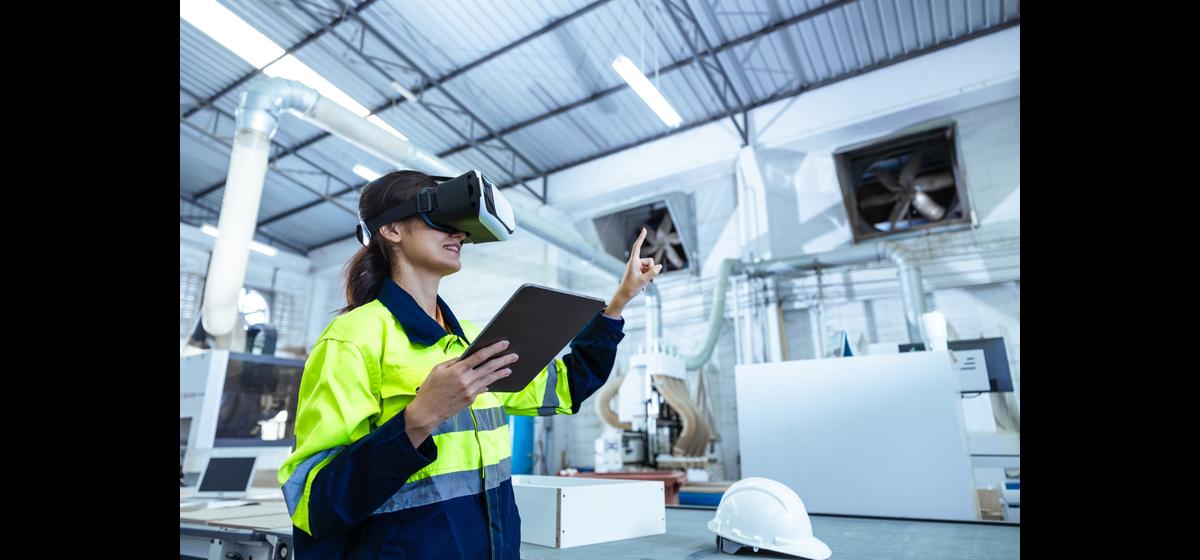
Daily manufacturing operations depend on accuracy, speed, and consistency across shifts and facilities. AR VR applications in manufacturing embed digital guidance directly into workflows, reducing dependency on manuals and supervisor intervention.
These technologies improve execution quality while minimizing downtime and rework.
Hands-Free AR Instructions for Assemblers
Augmented reality smart glasses and tablets deliver step-by-step visual instructions directly in the operator’s field of view. Assemblers get guidance that makes sense for their location without needing to leave their workstations or looking at SOPs.
Through AR training, operators can follow the correct steps while being hands-free, which can help improve productivity and reduce cognitive load.
Real-Time Visual Overlays to Reduce Mistakes
AR systems overlay torque values, alignment indicators, wiring paths, and tolerance limits onto physical components. These real-time visual cues help operators identify deviations before errors propagate downstream.
Many AR use cases in manufacturing show measurable reductions in first-pass defects and rework by guiding workers during complex assemblies.
VR Sandboxes for Testing Layout Changes Before Implementation
Using virtual reality in manufacturing allows teams to simulate production line layouts, material flows, and operator movement before making the physical change. Engineers evaluate ergonomics, safety clearances, and bottlenecks in a virtual sandbox without disrupting live operations.
This approach helps organisations avoid expensive layout fixes and lost production time and is one of the most practical virtual reality examples in use today.
Mixed Reality for Comparing Designs Against Live Equipment
Mixed Reality blends digital CAD models with real-world equipment to validate designs on the shop floor. Engineers can then visually compare planned setups with existing equipment to catch any discrepancies early on. This method helps reduce design changes needed late in the process and makes teamwork better between engineering and operations.
These applications show how immersive tech aids operations, not just as separate digital tools.