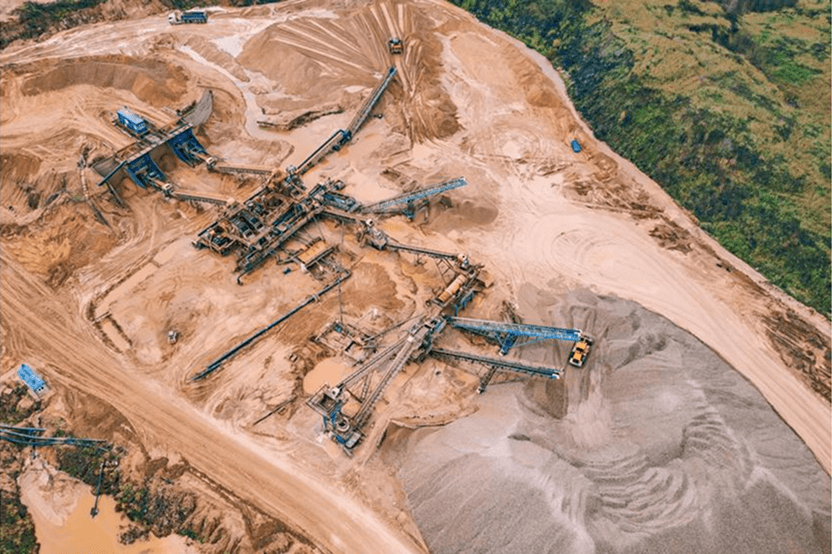
Using XR for mining research and development gives teams a unified environment to test geological hypotheses, analyse spatial data, and evaluate mining sequences - before committing resources on-site. Here are the three core capabilities driving that shift.
Visualizing Geological Structures With Greater Clarity
Geological interpretation typically relies on fragmented surface surveys and borehole data. XR platforms allow researchers to build virtual mine simulation models by combining 3D geological data, geophysical readings, and drilling records into a single navigable environment.
Consider a gold exploration project where borehole data is imported into a VR environment. Geoscientists can walk through a full-scale subsurface model, rotating ore body visualisations and inspecting fault lines from any angle. Structural patterns that might go undetected in 2D cross-sections become immediately visible. This spatial visualisation of faults significantly improves modelling accuracy and informs smarter drill placement decisions (Source).
Recreating Underground Conditions for Safer Study
Physical underground testing carries serious risks - and is rarely repeatable at scale. Using XR in mining enables simulation of ventilation dynamics, rock mechanics, soil behaviour, lighting conditions, and emergency scenarios without exposing personnel to workplace hazards.
For example, a team designing a new stope layout can simulate how airflow behaves under different extraction sequences, testing dozens of ventilation configurations in a virtual environment before any physical development begins.
Researchers can also model roof collapse scenarios or flash flood responses and assess crew reaction procedures in a fully controlled setting. This compresses trial-and-error phases and accelerates R&D cycles significantly.
Streamlining Remote Engineering Collaboration
Mining projects frequently span multiple geographies. When teams depend on static reports and 2D conference tools, critical context is lost in translation. A shared XR environment changes that dynamic entirely.
Imagine a geotechnical engineer in Perth and a mine planner in Johannesburg both stepping into the same mine layout simulation XR build. They annotate tunnel sections, flag structural concerns in 3D, and run scenario comparisons - all in real time, without a single flight booked. This eliminates the misinterpretation common in 2D reviews and significantly speeds up technical consensus.
Mining R&D organizations that adopt XR report improved design workflows and better alignment between field engineers and decision-makers.