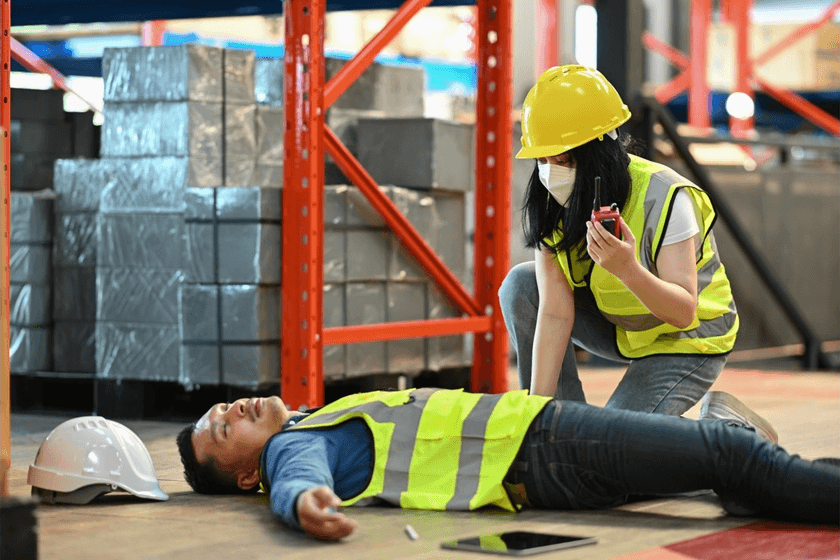
Every business has to contend with workplace hazards that could compromise the well-being of its workforce and interrupt standard operational procedures. These risks, spanning from common workplace hazards to more serious issues, demand immediate and appropriate intervention. A crucial segment of this blog will be dedicated to improving approaches and strategies of hazard management within an organizational setting. It will introduce inventive training methods such as immersive simulations and VR in the workplace, which create more practical learning experiences for employees thereby ensuring the prevention of safety hazards in the workplace.
What Are Workplace Hazards?
Workplace hazards include anything at work that could hurt employees, damage property, disrupt operations, or harm the organization. Some of these risks are obvious, like faulty wires. Others, such as job stress, are harder to spot. Any of them can change how people work, how comfortable they feel on the job, and whether they stick to safety rules. If companies are assessing health and safety risks proactively, they can find solutions and create safer conditions.
What Are The Main Types of Workplace Hazards?
It's a fact that every workplace has potential dangers. There are various types of hazards at the workplace. These fall into some main groups (Source).These categories of hazards in the workplace include physical, chemical, biological, ergonomic, and psychosocial risks. When businesses know about these different dangers, they can make plans to better protect their employees.
Safety Hazards
Floors that are wet floors or areas that are cluttered can lead to slip hazards. These can cause employees to trip and fall, which means that while it is a simple step, ensuring that these areas are neat and dry is important to prevent accidents. How flammable material is stored is also important. Workplaces need working fire extinguishers and straightforward plans for safe exits if there’s a fire. Unguarded machines are dangerous and can cause injuries. Fixing problems like this can help improve workplace safety.
Biological Hazards
Biohazards are often found in hospitals, kitchens, and research labs. People who work in these places are more likely to get sick from bacteria (which cause infections), viruses (that spread diseases), and fungi (which cause infections). To control biological hazards at the workplace, these workers should wear protective equipment like gloves, masks, eye protection, and lab coats, depending on what they're doing and the dangers they might face.
Chemical Hazards
Chemical hazards are caused when employees are exposed to elements such as solvents, cleaning agents, and industrial byproducts. Continued exposure could cause respiratory problems, skin irritation, or chronic illnesses. Ensuring adherence to established rules and implementing proper chemical storage processes will help in risk reduction.
Ergonomic Hazards
Ergonomic hazards in the workplace come up when people at work often have bad posture or use poorly designed tools. This may cause issues like repetitive stress injuries, muscle and bone related issues, and fatigue. This is common in offices, factories, and delivery jobs that have repeating tasks.
Physical Hazards
Common workplace risks include loud sounds, machine vibrations, extreme temperatures, and radiation. This brings in the relevance of electrical safety in the workplace as well. Factory, construction, and energy jobs often have more of these dangers. If not managed properly, workers could get hearing loss, burns, radiation sickness, frostbite, or other work-related illnesses.
Psychosocial Hazards
Psychosocial risks come from work design, how it's set up and run, and even workplace relationships. They include things like too much work, no say in your tasks, harassment, bullying, and a bad company culture. Psychological hazards can cause stress, worry, or burnout, which hurts how well you work, how often you're absent, and even your physical health. Companies that care about mental health as part of their safety plan are in a better spot to lower job risks of such kinds.
When businesses look at these occupational hazard types, they can get a better sense of workplace safety and put specific safeguards in place.
How to Identify and Assess Workplace Hazards
Workplace dangers can be missed and cause big problems, if you don't spot the risks. Good risk checks help companies find possible issues early, see how bad they could be, and put safety steps in place before accidents happen. A good check is deeper than a simple list. This involves checking out all the hazards at the workplace—from physical dangers and chemicals to germs, posture issues, and even stress—and seeing how people handle their work environment.By using experts, set ways of doing things, and the newest tools, companies can change how they find risks from just reacting to preventing accidents.
Risk assessment basics
Workplace risk assessment is a process of finding dangers, studying them, and deciding which safety steps are most important (Source). When we check health and safety risks, we look at both immediate dangers, like spills, and long-term problems, like strain from bad posture.
Role of occupational health and safety professionals
Safety experts are in charge of finding safety problems in the workplace and suggesting fixes (Source). They inspect sites, check if safety rules are being followed, and create training programs about job risks for each position.
Tools and techniques for hazard detection
Right now, hazard assessment uses things like checklists, tools that measure things digitally, and ways to file reports when something happens. Data analysis that guesses what will happen and sensors that connect to the internet can also find dangers at work before they cause accidents.
Businesses can use regular check-ups to figure out where workplace dangers usually pop up and how to handle them.
Effective Workplace Hazard Prevention Strategies
Preventing hazards is about more than compliance—it’s about creating safe and efficient work environments. Addressing each category of hazard at workplace settings requires layered prevention strategies.
Elimination and substitution
The best way to deal with dangers is to get rid of them. If you remove dangerous things or use safer options, you stop problems where they start. If you can't remove something, try replacing it with something safer, like a process, material, or tool. This really helps lower the risk. Doing these things not only makes the workplace safer but also cuts down on long-term expenses, like medical bills and lost work time.
Engineering and administrative controls
To make workplaces safer, consider changes like adding safety guards to machines or improving airflow. Managers can also introduce things like rotating shifts or limiting access to dangerous zones to cut down on accidents. Doing these things together can really help protect employees.
Personal protective equipment (PPE)
When elimination isn’t possible, PPE such as helmets, gloves, and safety glasses is critical. PPE helps minimize exposure to chemical hazards in the workplace and shields employees from physical hazards in the workplace (Source).
Training and worker involvement
Workplace training is key to improving employee awareness and accountability. When staff receive practical instruction on identifying hazards, they are more likely to prevent accidents. When employees are actively engaged, they become partners in reducing occupational hazard exposure rather than passive participants in compliance exercises.
Leveraging Virtual Reality for Safety Training
Companies now employ VR to imitate dangerous settings safely and reap the benefits of VR training. These platforms recreate fire drills, chemical handling, and electrical safety tasks. This method boosts memory and builds assurance better than traditional methods. Many firms use VR training software like VRseBuilder to grow these practices across teams. The gains of VR training go beyond safety, raising involvement and obedience. Using VR in work plans also lowers downtime as it readies staff for tense locations.
Companies can blend standard safety measures with modern tech like VR to build thorough plans that protect workers' physical and mental well-being.
The Importance of Reporting and Responding to Hazards
Even the best safety plans can't predict everything. Timely reporting helps us spot and fix common dangers at work. Good responses include fixing problems quickly, finding out why they happened, and talking to all teams involved. This builds trust and stops problems from happening again. In the end, proactive reporting makes our workplaces safer and lowers risks for everyone.