What is a VR Controller?
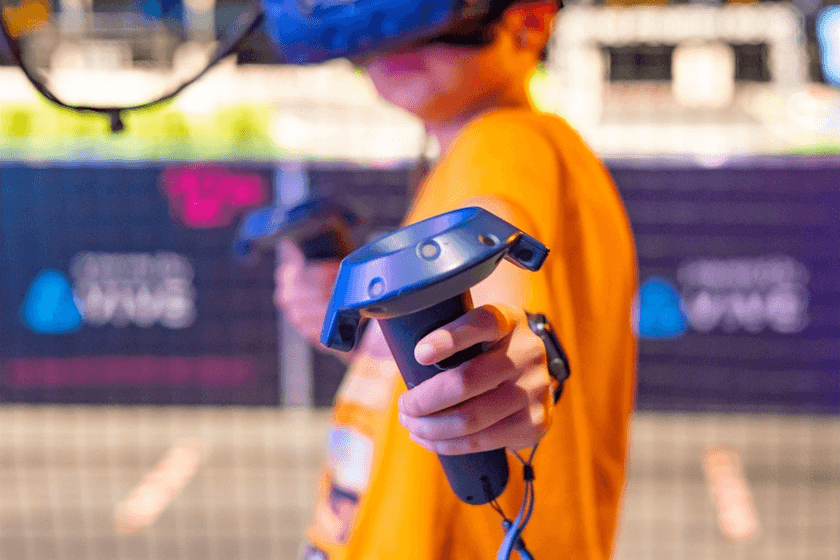
A VR controller is a device held in the hand that enables interaction with virtual environments. It tracks movement, button presses, and uses haptic feedback. Acting as a bridge between the physical and digital, it allows users to do things in a simulated space like grabbing, pointing, and pressing. They're important for VR headsets and controllers, bringing accuracy and a sense of realism to things like gaming, corporate training, design, and teamwork.
How a VR Controller Works
The VR controller serves as a basic component for anyone using virtual reality. It takes how your body moves and changes it into actions that can be used inside the virtual world. VR controllers contain sensors that track motion. They can maintain a wireless signal. The controller will vibrate or push back to simulate touching objects. This gives users a more natural sense of interacting with the virtual world.
Tracking and Motion Sensors
VR controllers commonly use sensors like accelerometers and gyroscopes, along with infrared tracking, to track hand motions. For systems with inside-out tracking, the VR headset's cameras locate the controller, removing the need for separate sensors. The HTC Vive and similar systems use external base stations to track controllers accurately in real time (Source).
Haptics and Feedback Systems
VR hand controllers use haptic motors to replicate real-world sensations using vibrations and resistance. For example, a small shake when firing a gun or the feel of tension when using a trigger helps pull players into the game by making actions seem real. Newer controllers, like those for PlayStation VR2, also have adaptive triggers that give even better force feedback (Source).
Connectivity and Compatibility
VR controllers are mostly wireless, connecting through Bluetooth or radio waves for fast response times. If a solid signal is a must, wired controllers are an option. For best results, controllers usually stick to their own system, like the Meta Quest 2 or Valve Index (Source). This setup gives the best performance but doesn't always allow for use across different platforms.
VR controllers use motion tracking, haptics, and wireless tech to give a realistic feel to virtual actions. The combination of these features ensures that movements are accurately translated into the digital world. This keeps users focused when they use VR.
Types of VR Controllers
VR controllers display a rich assortment of designs, each precisely engineered to meet the needs of specific applications and user preferences. The variance in their form factors and functionalities is largely dependent upon the target user group and the VR system they are designed to support.
Standard VR Hand Controllers
These controllers usually have motion tracking, buttons, and triggers. Popular systems, such as the Meta Quest 2 and HTC Vive, include them as standard input devices for their VR headsets (Source). Because of this, people can interact with virtual three-dimensional spaces. These controllers are like the user's hands, letting them reach out and handle items in VR. Motion tracking informs the system of the controller's location and direction in space, copying the user's actual hand motions in the virtual world.
VR Remote Controls
VR remotes tend to have a simple design, often featuring a trackpad and trigger. Their motion tracking isn't very advanced. A good example is the Oculus Go, a standalone VR device (Source). This approach made basic VR accessible, since it didn't need fancy sensors. Simple controls helped people quickly get used to the virtual world, which made interaction direct and easy. Think of using the remote to point and click, similar to using a laser pointer; this makes it easy even if you're new to VR.
Advanced Input Systems
VR controller design is moving toward more realistic interactions, going beyond simple buttons. For example, the Valve Index controllers can sense each finger's movement, letting users make natural hand gestures like grabbing or pointing. Besides these improvements, many new devices are in testing, such as VR gloves that give tactile feedback, and optical hand-tracking systems. Optical systems use cameras and computer programs to record small hand movements. This eliminates the need for a handheld device and still provides precise control in a virtual space.
The target is to deliver a more genuine and immersive user experience. This direction indicates a move toward controller designs that prioritize natural human movement. This will help produce a more seamless and engaging virtual world.
Benefits of Using VR Controllers
Even with the increasing capabilities of gesture recognition and hand-tracking technologies, physical controllers continue to be a key part of VR experiences. These controllers give users a certain level of accuracy, tactile feedback, and ease of using the system. As of now, substitute methods are still in development to match the overall experience of controllers.
Precision and Control
Virtual Reality hand controllers precisely convert actual physical movements into digital actions. This precise conversion makes sure that a virtual grab, swipe, or press mirrors what the user intends to do, and it happens almost instantly. This exactness is very important in enterprise VR uses like medical training or design prototyping.
Enhanced Immersion
Haptic feedback and adaptive triggers produce sensations that mimic those felt in the real world, which helps to make virtual reality feel more believable. When you sense the tension of a bowstring as you pull it back or the feel the shaking of a tool in your hand, that can help improve memory in training exercises. For entertainment, it simply makes games more realistic and immersive.
Versatility Across Applications
VR controllers can be used in many fields, from company safety exercises to fun and games. For example, in logistics, they can imitate using machinery. In architecture, they let clients touch and work with 3D models. These devices are adaptable for various tasks, making them key to VR headset control across multiple fields.
Since VR controllers can be adapted to various needs, they have become quite critical to control VR headsets. We can expect VR controllers to expand into more industries and applications as technology evolves.
The Future of VR Controllers
As VR tech gets better, controllers are doing more than just tracking movement. The next set will likely use AI, biometrics, and better touch features to make interactions and experiences feel more real.
AI is expected to improve how controllers respond. Expect the controller to change how it vibrates or how much resistance it gives based on what you are doing in the VR world.
Biometric sensors might show up in the grips. These could keep tabs on your heart rate or stress levels and adapt the intensity of the training accordingly.
Gesture-free systems may use optical and neural input, removing the need for physical controllers while offering seamless interaction.
Major companies are putting a lot of money into improving these features, showing that VR controllers will likely stay important in immersive systems for a long time.