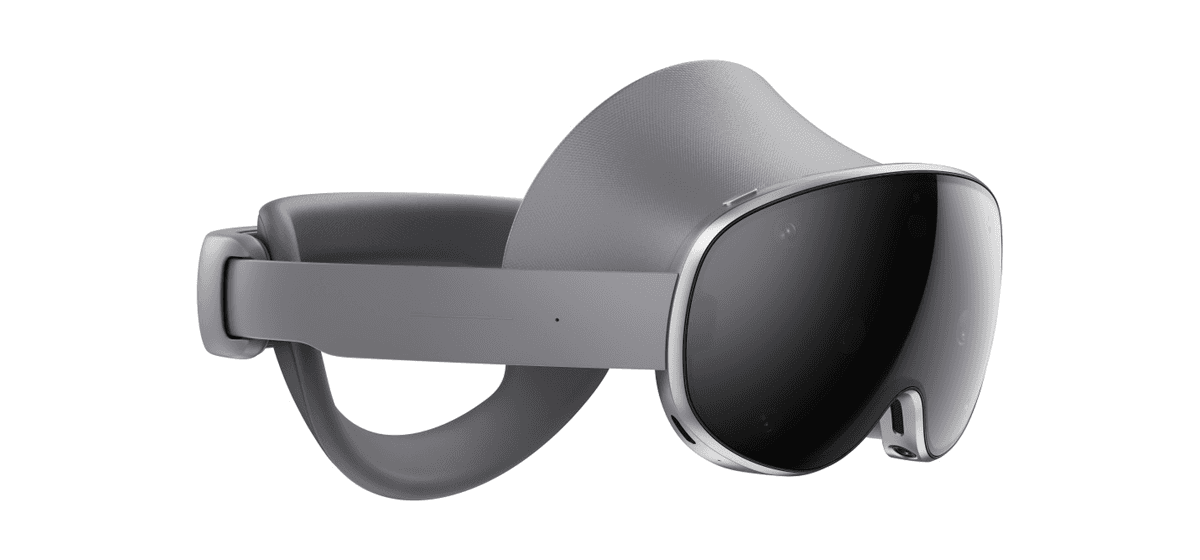
What is Samsung Galaxy XR?
Samsung Galaxy XR is a mixed reality headset developed by Samsung in collaboration with Google and Qualcomm, running on Google's Android XR platform. Built around the Snapdragon XR2+ Gen 2 chip and announced in 2024, it brings together virtual and augmented reality in a headset that can run standard Android applications alongside immersive XR content.
The device is Samsung's first major foray into the spatial computing hardware space, positioning itself as an enterprise and prosumer alternative to Meta Quest 3 and Apple Vision Pro. Its defining advantage is Android ecosystem integration: it runs Play Store apps, works with Google services, and can be managed using the same MDM tools IT departments already use for Samsung phones and tablets.
Key Features of Samsung Galaxy XR
Samsung Galaxy XR comes packed with features that make it fit right into the XR ecosystem without seeming like a new entrant. Android foundations, ability to switch between VR and AR, AI integration, and the Snapdragon XR2+ Gen 2 chip make it a complete package. Here’s a breakdown.
Android XR as the Foundation
Unlike headsets that run proprietary operating systems, Galaxy XR runs Android XR - meaning it can access Android apps, integrate with Google services like Meet, Maps, and Workspace, and be managed using standard Android MDM tools.
For IT departments already managing Android devices at scale, this dramatically reduces the complexity of deploying and governing XR headsets. Policies around app access, data security, remote wipe, and compliance reporting that are already in place for phones can be extended to cover the headset fleet with minimal additional configuration.
Mixed Reality Capabilities
The Galaxy XR headset features high-resolution passthrough cameras that allow users to see their physical environment with virtual overlays. Users can switch between fully immersive VR and mixed reality modes, making the device suitable both for training simulations requiring complete immersion and for AR-assisted workflows.
The Galaxy XR is excellent at maintaining awareness of the physical environment while working with a digital interface, for example when walking around a real facility while viewing digital overlays on equipment.
Gemini AI Integration
Samsung Galaxy XR integrates Google's Gemini AI, enabling voice-activated queries, real-time translation, and contextual assistance directly within XR experiences. In enterprise scenarios, this means a worker can ask the AI a question about the equipment they're looking at, request a translation of foreign-language documentation, or get a verbal summary of a work order, hands-free, without leaving the XR experience.
This level of integrated AI assistance is more deeply built-in than on most competing headsets.
Enterprise Use Cases
Here are some ways in which engineering, healthcare, mining, manufacturing, and educational institutions currently use mixed reality applications:
Training and Simulation
Running on Android XR, Galaxy XR can deploy VR training modules that organisations already use on other platforms, with the added benefit of managed deployment through Android enterprise tools.
Safety training, onboarding simulations, and procedure practice can be delivered, tracked, and updated centrally through the same app management infrastructure used for mobile enterprise apps. For large organisations with existing Android device management programmes, this is a significant operational simplification.
Collaboration and Design Review
Teams can meet in shared virtual spaces, review 3D models, and collaborate in real time across locations. Because the device runs standard Android conferencing apps alongside dedicated XR collaboration platforms, it fits into existing workflows more naturally than purpose-built XR operating systems.
Google Meet integration means colleagues who don't have a headset can join the same session from a laptop, which matters for mixed-device enterprise environments.
Productivity and Information Access
The ability to run standard Android productivity apps in spatial panels means workers can access documents, emails, and dashboards without switching devices. For roles that involve both physical work and significant information access, such as for site managers, quality engineers, operations supervisors, having a single wearable device that handles both the XR simulation and the productivity layer is genuinely useful.
How It Compares to Other Headsets
Compared to Meta Quest 3, Samsung Galaxy XR offers deeper Android integration and Google ecosystem compatibility, which matters significantly for enterprise IT management and compliance.
Compared to Apple Vision Pro, it is expected to be more accessible in price and more open in its development environment. Whereas visionOS apps must be built specifically for Apple's platform, Android XR apps can be adapted from the existing Android codebase. The Snapdragon XR2+ Gen 2 chip delivers far better performance compared to other high-end standalone headsets.
What to Expect
As Android XR matures and more Galaxy XR devices reach enterprise customers, it will likely become an important platform option for organisations that want capable XR hardware without locking into a single-vendor ecosystem. Samsung's manufacturing scale, global distribution network, and existing enterprise relationships give it potential reach that newer XR hardware manufacturers lack.
Watch for expanded enterprise programmes, MDM partner integrations, and a growing catalogue of Android XR-optimised training and productivity apps as the platform develops through 2025 and 2026.
