What is Mixed Reality Passthrough?
Mixed Reality Passthrough allows you to see and interact with your actual environment while still seeing digital elements in a virtual space. It uses cameras on a headset to mix what's around you with what you see on the screen, creating a better mixed reality experience.
This feature changes XR. Instead of an isolated experience, it's now interactive, aware of its surroundings, and ready for enterprise use.
How Mixed Reality Passthrough Works
Mixed reality passthrough uses a VR headset's cameras to let you see the real world but with digital elements superimposed onto the view. It mixes the real and virtual, so you can walk around your room while interacting with virtual models, dashboards, or notes.
It is designed to make interaction better by making you feel like you're in both the real and digital world at the same time.
The Role of Cameras in Passthrough
Mixed reality headsets use wide-angle RGB or depth cameras to show you what's around you in real time, right inside the headset. Depth mapping can enhance the footage which helps align the digital content with real-world objects.
Spatial Anchoring and Environmental Mapping
To make mixed reality passthrough meaningful, the system figures out the layout of the room, including furniture and surfaces. This ensures that virtual elements are stable and real - like a 3D model sitting right on your desk or a control panel floating above a real machine.
Device Requirements for Mixed Reality Passthrough
For passthrough to work well, you need good processing and quick rendering. The Meta Quest Pro and Apple Vision Pro are made for this, using color passthrough, spatial audio, and eye tracking to make things look and feel real (Source).
Mixed reality passthrough needs cameras that capture images in high quality, along with software that can understand real-world shapes rapidly and with precision.
Why Mixed Reality Passthrough Matters
Mixed reality passthrough improves XR by making it easier to use, more practical, and better for collaboration. It doesn't just replace the real world; it makes it better by adding information and data right where you need it.
Safety and Awareness
For jobs like manufacturing, logistics, or on-site repairs, users can get instructions in real time, without losing sight of what’s happening around them. Mixed reality passthrough means they don’t have to remove their headsets to interact with tools, people, or obstacles in their way.
Seamless Mixed Reality Workflows
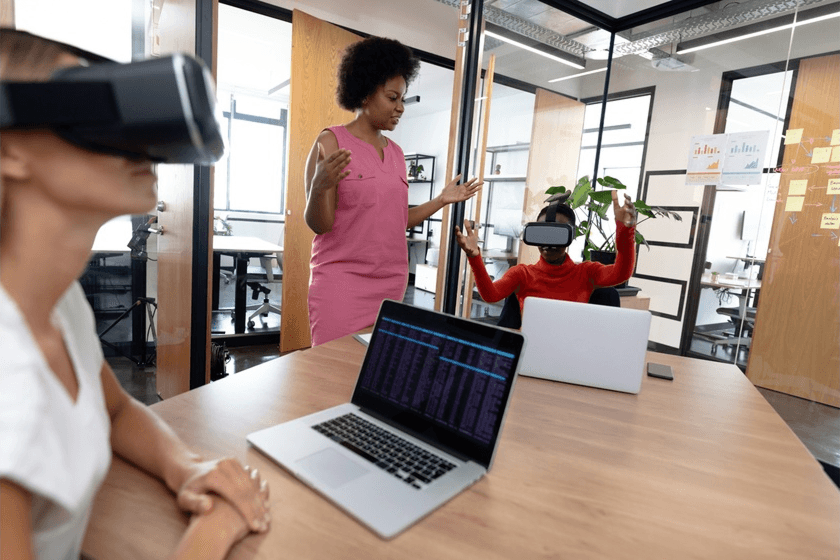
Mixed reality with passthrough lets teams work with both real-world and digital information at the same time. Think of it as viewing schematics on top of a building while walking through it or tweaking a product prototype together in a virtual space. Passthrough aims to keep things smooth and distraction-free.
Reducing Friction in Enterprise XR
The smoother the experience, the more likely it is to be accepted. Passthrough gets rid of the need to swap between your headset and a screen, which makes it simpler to add XR tools to your daily work.
Mixed reality passthrough gives you a heads-up, hands-on view – great for quick decisions, instruction, and real-time help.
Headsets that Support Mixed Reality Passthrough
Modern headsets now offer mixed reality passthrough, but the fidelity, comfort, and depth perception can vary. If you’re looking for the best mixed reality passthrough headset options, consider what matters most for your use case — resolution, tracking accuracy, or platform compatibility.
The Pico 4 is a good pick if you want features, flexibility, and reasonable price (Source). You get good performance for what you pay, mostly if your team requires a VR headset that’s standalone and works across different platforms.
Meta Quest Pro
The Meta Quest Pro has colour passthrough with spatial anchoring, making it perfect for design reviews, teamwork, or hybrid workspaces (Source). People can use real-world elements like objects, papers, or screens while overlaying digital information.
Apple Vision Pro
The Apple Vision Pro has a really advanced mixed reality system that uses eye and hand tracking, along with ultra-high-resolution video. It maps out the space around you and uses live video to create a convincing MR experience, where what's real and what's digital mix together well (Source).
Emerging Enterprise Headsets
Varjo, HTC, and Pimax devices offer mixed reality through video passthrough. You'll usually find these in fields that use a lot of simulation, such as aviation, automotive design, and surgical training. In these areas, realism and accuracy is quite critical.
As more headsets add passthrough features, mixed reality apps are becoming more useful and widespread.
Use Cases for Mixed Reality Passthrough
Mixed reality passthrough is changing how companies train people, work together, and operate. It adds helpful digital information that enhances real-world activity instead of replacing it.
Remote Guidance and Field Support
Technicians in remote locations can get expert guidance without looking at a phone or tablet. Mixed reality passthrough lets them see annotations or instructions directly from the equipment they’re handling.
Design Iteration and Prototyping
Design teams can now review 3D ideas at their actual size, with real lighting, right where they'll exist. This passthrough feature lets teams talk about changes while seeing their physical environment.
Onboarding and Safety Training
Companies are using MR passthrough to create onboarding modules that are impactful. New joiners can view safety protocols right in their workspace, along with digital prompts that reinforce what they're learning.
Mixed reality passthrough can make training, support, and design better since it links data to real-world places, making it relevant and helping retention.
The Future of Mixed Reality Passthrough
As processors get quicker and cameras get better, mixed reality passthrough should become the standard for high-end headsets. Features like dynamic occlusion, real-time object recognition, and UIs that understand context will make passthrough even more engaging.
Mixed reality with passthrough will really change how industries visualize data, work together across the globe, and operate with safety in combined virtual and real spaces.
CTA: Want to See What Mixed Reality Passthrough Can Do for You?
Let AutoVRse help you explore how to bring MR passthrough into your workflows—from training and support to spatial reviews and more.