What is the Field of View (FOV)?
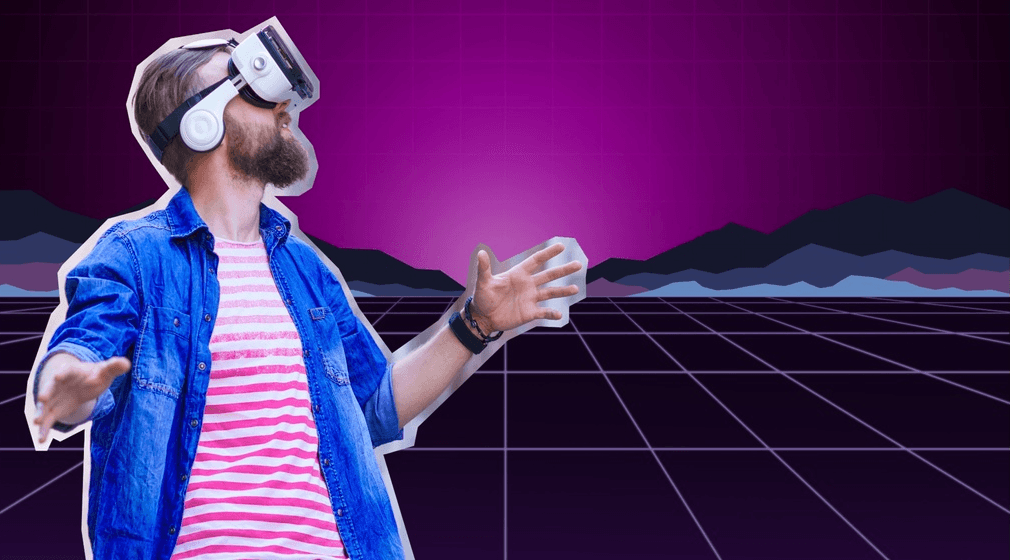
Field of View, or FOV, tells us how much of the world a person can see at any given moment, either with their own eyes or on a screen. In VR, FOV is how much of the virtual world a headset shows to the user. A wider FOV lets people see more of the digital environment at once, making them feel more like they're actually there. This broad view is closer to how we see in the real world and helps create a stronger sense of presence in the simulation.
Field of View in VR
Field of view in VR is a key element as it greatly affects how real and absorbing virtual experiences feel. It is the extent of the virtual world a user can see at any moment. Realistic immersion presents a feeling of truly being present in the virtual world. A wider FOV improves this sensation, making the virtual world seem more real. When more of the simulated environment is seen, users tend to forget their surroundings, improving their sense of presence in the virtual space.
Defining Field of View
FOV is measured in degrees and usually tells you the angle between the farthest points you can see without moving your eyes or head. For VR headsets, this angle shows how big the digital world looks. Humans can see about 200 degrees horizontally and 135 degrees vertically (Source). But most VR headsets for consumers offer a FOV between 90 degrees and 120 degrees.
Why Field of View Matters in VR
A wider view in a headset makes virtual environments feel more real and less cramped, increasing the feeling of being there. On the other hand, a narrow FOV can feel like looking through a tunnel, which lowers the sense of reality and may cause motion sickness. Getting the view right is very important for VR training in fields like aviation and manufacturing. This is needed to make sure users feel the virtual settings are close to actual conditions.
In conclusion, having a good grasp of FOV is key for VR hardware companies and businesses planning to deploy VR tech.
Types of Field of View in VR
Field of View in VR can be classified in different ways. These classifications depend on whether the measurement is taken across different dimensions or with respect to the user's eyes. Each of these measurement approaches helps specify how immersive a VR headset appears to the person using it.
Horizontal and Vertical FOV
Horizontal FOV gauges how much you can see from left to right. Vertical FOV measures the view from top to bottom. Many VR headsets list horizontal FOV in their specs since it mainly affects how real the experience feels. Vertical FOV also counts toward realism, mostly when you’re dealing with things above or below eye level. Horizontal and vertical FOV work together to shape VR. Horizontal FOV creates immersion, and vertical FOV makes seeing the whole virtual space feel real. Both are key for believable VR games. VR system designers balance FOV for user comfort, avoiding tunnel vision while keeping visuals clear. This results in realistic and satisfying VR for any use.
Monocular and Binocular FOV
The scope of vision perceived by a single eye is known as the monocular FOV. When both eyes are open, the resulting visual scope, which includes an area of overlap, is termed the binocular FOV. In VR, the binocular FOV is of greater relevance as it represents the synthesized visual input from both eyes. This merged input is what allows humans to perceive depth and experience a three-dimensional environment. It is the synergistic operation of both the monocular and binocular fields of view that determines the quality and accuracy of spatial perception within the VR environment.
Field of View Standards Across Devices
When examining Virtual Reality headsets, one must consider the field of view they offer. Different devices vary in this aspect. To give some examples, the Meta Quest 2 shows about 97 degrees horizontally (Source). The HTC Vive Pro 2, in contrast, can reach up to 120 degrees (Source). The Pico 4 is built to provide approximately 105 degrees (Source). When choosing a device, it depends on the task at hand. For activities like gaming, a wider view can improve the experience. In professional simulations, peripheral awareness is also important. This way, people using the device can see more of their surroundings at once. This added awareness leads to a more natural and immersive simulation.
Both businesses and users look for VR devices that provide a good mix of a wide FOV with sharp, clear visuals.
How Field of View Impacts VR Experience
The design of FOV is essential to the perceived quality of a VR experience. A carefully designed FOV can greatly increase a user's sense of immersion, making them feel truly present in the virtual environment. This feeling of presence is critical for the success of any VR simulation. If the FOV is not carefully considered, the VR experience may seem artificial and disconnected. This can pull the user out of the simulation and weaken the overall impact. This sense of disconnection ruins the illusion of reality that VR aims to create.
Immersion and Presence
A wider field of view can make people feel more involved in a virtual world. Feeling present is key, especially for training that needs strong focus, like in healthcare and logistics. If people feel like they're really there, they remember things better, which helps them make better choices in the simulation.
Comfort and Motion Sickness
Motion sickness is a common problem for VR users. It typically arises when there's a contradiction between visual input and the information sensed by the inner ear. An improperly adjusted field of view can exacerbate this issue. Headsets designed for comfortable viewing may improve user experiences and decrease instances of motion sickness. This could encourage more people, especially those prone to motion sickness, to try VR.
Performance Considerations
Widening the FOV increases the number of pixels that need processing for each frame. If not handled carefully, this can strain the GPU and lower frame rates. Foveated rendering, which renders only the viewed area in high resolution, is one of the approaches to balance performance and viewing experience.
Headset manufacturers should balance a wide FOV with system performance to ensure smooth, high-quality experiences.
The Future of Field of View in VR
The evolution of Field of View VR is focused on crafting experiences mirroring human vision. Improvements in lens tech, such as pancake lenses, aid in cutting back size and broadening the field of view (Source). With eye-tracking, VR can focus on rendering details in areas of focus. This allows wider fields of view to work without requiring great processing power.
Industry leaders are now working on headsets that offer almost human-like FOV, close to 200 degrees horizontally. The aim is to get rid of tunnel vision for a user experience that feels real. If companies use VR for training, this jump means staff can practice in settings that feel more like the real world, which should lead to better results and safer practices.
As technology improves, FOV will continue to greatly impact how natural and useful virtual reality is.
Ready to build engaging VR experiences with enhanced FOV?
Reach out to AutoVRse to see how we approach design with a focus on clarity and comfort.