Back to Blog List

3 Obvious reasons why our current alarm around XR is an overreaction

3 Obvious reasons why our current alarm around XR is an overreaction

On January 15, 2026, Meta released a blog that triggered paranoia about the future. In said update, Meta made two announcements around XR (Extended Reality): 

  • Meta was shutting down Horizon Managed Services (its first-party device management solution). Existing HMS customers receive support until January 4, 2030

  • Commercial SKUs of Meta Quest will no longer be available for sale

Critics took these announcements as a sign of an ‘XR Winter.’ Many prophesied the end of tech giants’ investment in the extended reality space.

Adding further fuel to the fire was a report from The New York Times, just 3 days before these announcements. The NYT revealed Meta’s plan to lay off 10% of its Reality Labs division—Meta’s XR division, with around 15,000 staff. 

Meta’s larger plan also included the shutdown of Twisted Pixel, Sanzaru Games, and Armature Studio. All three were VR (Virtual Reality) gaming studios that Meta acquired in the years prior. 

Panic ensued. Predictions of a catastrophe were focused on the following premise: If the market leader is pulling away, then the space is a failure.

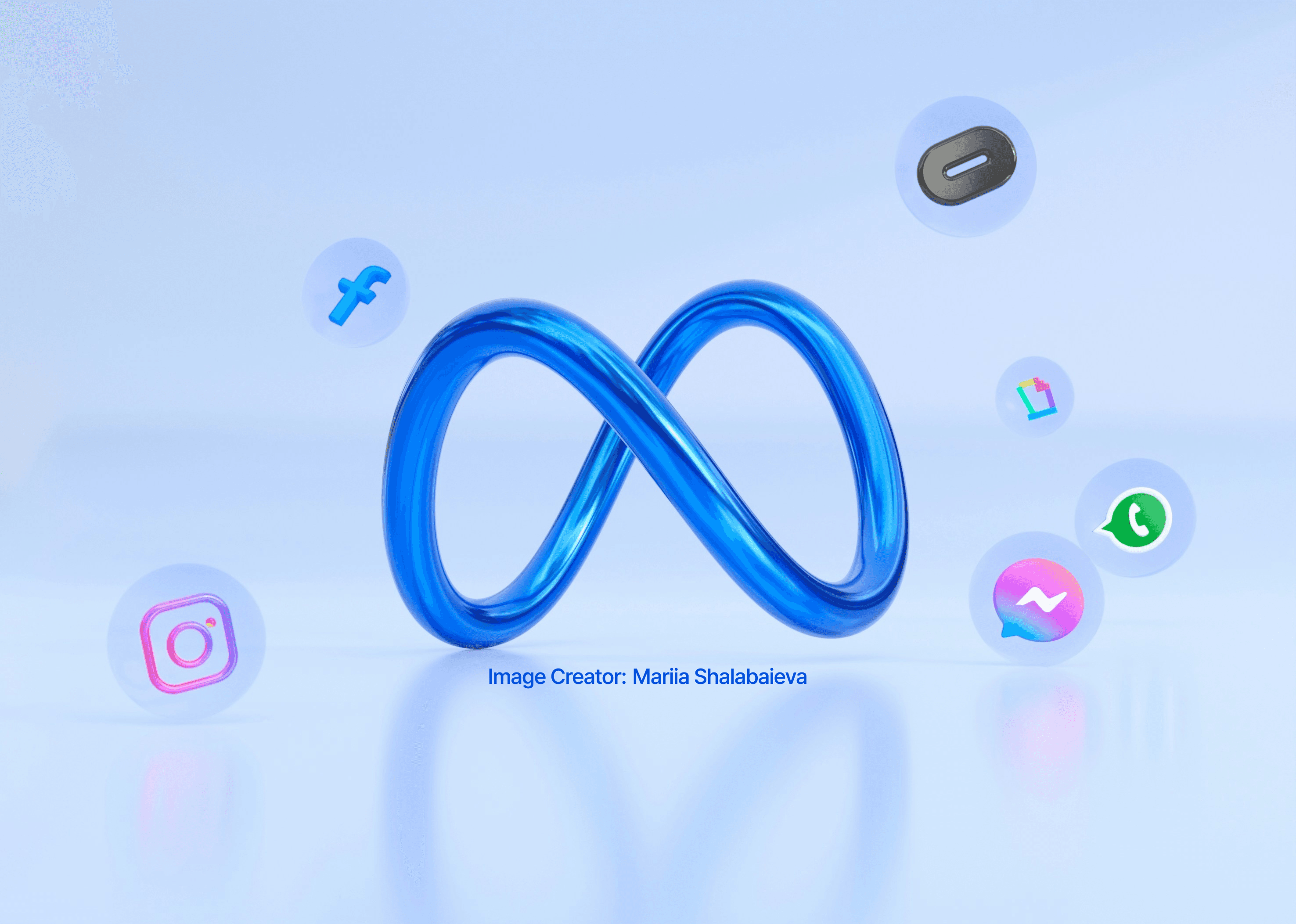
Because Meta has been the flagbearer for the XR space. Since it acquired Oculus in 2012, the company has poured billions into XR. It has launched hardware (like the Meta Quest), platform services, and software. The company even changed its name from Facebook to Meta.

But, Meta’s plans alone can’t be evidence enough for us to proclaim the demise of the XR industry.

There’s a lot more happening behind the scenes.

Reason #1: Meta’s continued investment in XR

The first thing to note is that Meta isn’t pulling back from the XR space. If anything, it’s doubling down.

For context, XR isn’t limited to VR, but also includes AR (Augmented Reality) and MR (Mixed Reality). If you see from this context, Meta’s announcements are signs of a pivot within XR: from VR to AR. 

In the past few years, VR was Meta’s priority. Now the priority is shifting to AR. For instance, in 2025, they released the second version of their Meta Ray Ban glasses—an AI-enabled AR glass. 

This pivot also doesn’t mean that Meta has abandoned VR. If you read the last paragraph of the same blog announcement, you’ll see, “We remain committed to VR for the long term, and will continue to invest in growing and evolving the category.”

“They [Meta] still employ the largest team working on VR by about an order of magnitude.  Nobody else is even close,” said Palmer Luckey, the founder of the original Oculus and former Meta employee, in a statement on his X account.

Luckey also opined that Meta closed the VR studios because most studios and developers couldn’t compete with the Meta-owned ones. The Meta-owned studios had budgets that exceeded even the revenue their games would’ve generated. Smaller teams can’t afford to take such risks. 

This dominance of internal studios is at odds with Meta’s long-term plan. Meta intends to turn their Meta Store into an ecosystem like Apple’s App Store, Google’s Play Store, or Valve’s Steam Library. For such an ecosystem to thrive, many companies and individuals should be able to release their VR games and applications and make a profit. 

The current dominance of titles from Meta-owned studios would prevent that.

Reason #2: Meta isn’t the only tech giant investing in XR

If you closely observe the XR space, you’ll see that Meta isn’t the only tech giant making major investments in XR.

A patent that Apple filed in December 2025 reveals that the company is working on AI-enabled AR glasses. Likewise, on October 12, 2025 (exactly 3 months before Meta’s blog), Apple announced its updated version of Vision Pro, with the more powerful M5 chip. 

Just a week after Apple’s announcement, Samsung launched Galaxy XR—an XR headset developed in collaboration with Google and Qualcomm.

Galaxy XR runs Android XR, Google’s new operating system tailor-made for XR devices.

A month later, on November 12th, Valve announced the Steam Frame—a VR headset targeted at gamers.

PICO (owned by TikTok’s parent company ByteDance) revealed its new operating system for XR devices named PICO OS 6. In the same presentation, PICO also teased its upcoming flagship XR hardware, currently named ‘Project Swan.’ 

For a space that seems to be hearing the elegy, there’s a lot of innovation going on.

Yet, these innovations don’t explain why Meta closed down Horizon Managed Services. But a closer look at tech giants’ history does.

Reason #3: Giant tech companies kill great products a lot

In 2005, Google launched Reader. 

Reader aggregated content from many websites—including news websites and blogs—to a single feed. Users no longer had to visit individual websites to read the latest news or a new blog from their favorite writers. Those arrived in their feed inside Reader, automatically.

People loved it. Reader was a boon in the pre-algorithmic feed era of the internet. At its peak, Google’s Reader had 30 million active users

Despite the acclaim, on March 13, 2013—not even a decade after launch—Google announced that it was shutting down Reader

The announcement didn’t go down well. 

Backlash came from different corners. Journalists from top news media sites, like The Guardian and The Atlantic, criticized the decision. In a desperate attempt to keep Google Reader running, fans started a petition on change org and received 1 million supporters.

But the pushback changed nothing. Google stuck to its decision. Reader shut down on July 1st, 2013.

Because this is routine for Google. Reader is one casualty among the many beloved products Google has killed. The website ‘Killed By Google’ tracks the list of products Google has shut down. 

The current number of casualties stands at 299.

Google isn’t alone. Other tech giants all do the same.

Microsoft’s list of now-shut-down products currently stands at 202. 

Meta’s list so far includes Lasso (a TikTok competitor), Diem (a cryptocurrency), and Portal (a smart display). 

Amazon also has its fair share.

There are many reasons why these companies kill their products. Some, as in the case with Amazon’s Fire Phone, are misfires. Some, like Microsoft’s Zune, are ill-timed.

Others, like Reader, are shut down not because the product is a failure. Or because it isn’t profitable. 

But because they don’t make enough money for the company. Their other products are bringing in billions in revenue. Compared to that, the profit that products like Reader bring is minuscule, even if it’s millions.

The last reason for product discontinuation is a strategic pivot. The company has a new vision—as is the case with Meta. As a result, if any products don’t align with this new direction, companies place them on the chopping block.

Meta is in a race for AI dominance against similar giants like OpenAI, Anthropic, and Google. Each company is investing billions into AI, in the hope of emerging victorious at the other end.

For Meta, AR glasses are in line with this new vision. Continued investment of billions into VR isn’t.

Meta’s ambitions are at odds with enterprise needs

Meta’s vision with VR is to build the Metaverse—an evolution of its existing products centered around social connection, such as Facebook, Instagram, and WhatsApp. Meta describes the Metaverse as ‘the successor to the mobile Internet.’ For them, VR is merely a medium for people to enter the Metaverse.

This vision is at odds with enterprise needs.

Meta’s revenue model hinges on data collection. Meta tracks users both across its own products—like Instagram, Facebook, Threads, and WhatsApp—and across other websites. 

As a user browses, searches, consumes, and engages with content, Meta collects data about their specific preferences. Meta then serves the data to advertisers, who can target ads to their specific audience, inside Meta’s ecosystem of products. 

Compared to smartphones and computers, VR headsets collect more data. This includes eye movements (denotes what the user is focusing on) and facial expressions (denotes how the user feels about certain things), which Meta’s privacy policy mentions among the user data it tracks. 

The amount of data that Meta possesses on a single user, as a result, is unprecedented. 

Enterprises strive to protect their data and maintain strict guardrails to keep their data private. In Meta’s version of XR, enterprises have to trust not just Meta, but also other third parties who use Meta’s platforms, with critical data. 

So, Meta’s pivot might be a blessing for the XR industry and enterprises. 

Meta has pushed the boundaries of XR, particularly with its hardware. Now, other tech companies will take up the baton and run on the track they’ve paved.

Let’s talk about

Let’s talk about

Let’s talk about

your training

your training

your training

Talk to our team to learn how to implement VR training at scale

Talk to our team to learn how to implement VR training at scale

Talk to our team to learn how to implement VR training at scale