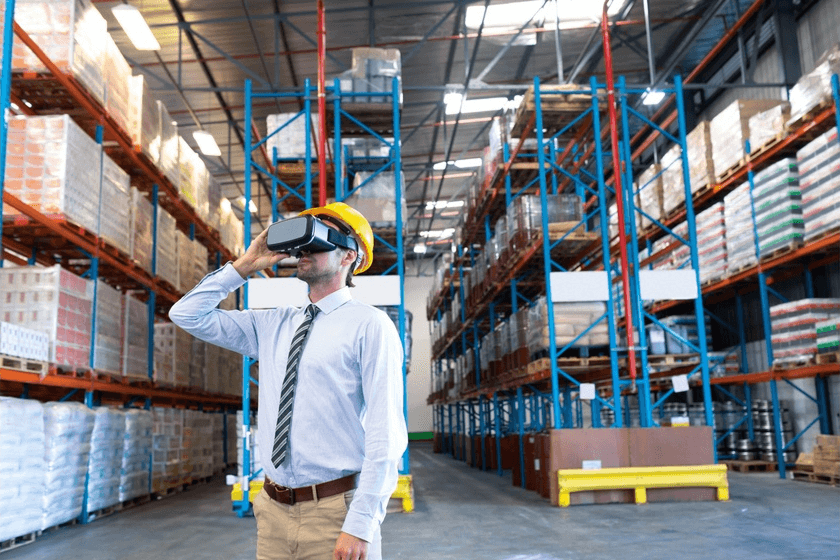
There are numerous training-related use cases for VR in warehouses. Here are the most common ones.
1. Onboarding
The chief one, of course, is onboarding. Traditional methods, such as shadowing a technician and observing them at work, aren’t the best to learn actual procedures.
Imagine a trainee watching an experienced technician operate a forklift as part of their warehouse onboarding training. The technician can show them the exact steps to follow and even explain the reasoning behind them. But the same trainee can’t be trusted with operating the forklift hours later.
Since VR training makes the trainee do the actual steps involved, like operating a forklift, the trainee would be better equipped to operate the machines. Trainee will have a better recall of the procedures at an instinctual level.
This extends to multiple use cases that are part of onboarding. You can deploy VR training for logistics related. You can deploy VR training for packaging. You can even deploy VR training for manufacturing adjascent warehouse operations.
2. Material handling
Warehouses contain heavy materials and complex machinery. A lack of caution around these leads to injuries and even fatalities.
Hence, following the right safety standards is important. But so is understanding the repercussions of not following these standards.
VR training can help with this precisely.
Consider our client, JSW. JSW started its long-term partnership with AutoVRse with a single module for conveyor belt safety. The module was specifically selected due to lapses around conveyor belts being the cause of a few incidents.
In the module, we implemented a consequence-based learning approach. In addition to showing the right safety measures to take around a conveyor belt, the module also showed the consequences of not following these measures. Employees understood the repercussions of a careless mistake or a lapse in attention on a deeper level.
[JSW has since expanded our partnership and implemented VR training modules covering numerous use cases. In fact, JSW reports that the people they’ve trained in VR have been involved in zero safety incidents.]
3. Hazardous material handling
A third use case is the storage and handling of hazardous material. Hazardous materials, including chemicals, require the utmost care. Careless mistakes, such as making direct contact with the material, result in injuries or even fatalities.
For TATA Power Solar, AutoVRse created a VR training module to improve their safety practices around hazardous chemical handling. The module, centred around a chemical spillage, has the user identify the spilled chemical, contain the spillage, and prevent its spread to avoid further damage or hazards.
[Embed the Video Here]
4. Common safety modules
Other common implementations of VR training in warehouses are around common safety use cases:
LOTO/Lockout Tagout VR Module: ensuring that access is restricted when things like maintenance is ongoing.
Fire Safety VR Module: ensuring employees follow the correct procedures to contain small fires and escape large fires
Work at Height VR Module: ensuring everyone who works at height follows the right procedures, such as wearing protective equipment and taking other protective measures.