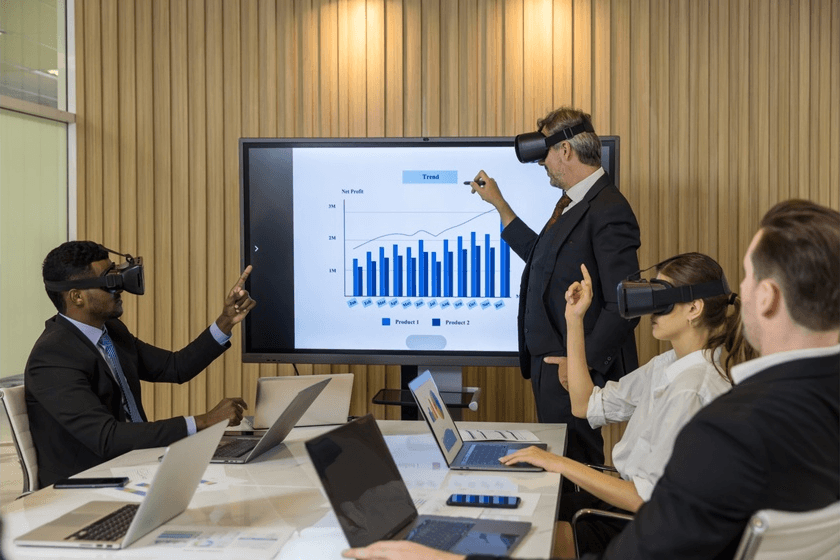
The true power of VR lies in its ability to capture multidimensional data streams. Each category of data contributes to a more holistic picture of learner performance and engagement.
Usage Data
Usage data focuses on participation and activity levels. Organizations can monitor session counts, time spent inside modules, and module completion rates. For example, if certain modules have lower completion rates, it signals the need for redesign or shorter scenarios. These metrics resemble LMS tracking but are enhanced with immersive detail.
Performance Data
Performance metrics measure how well trainees execute specific tasks. Metrics include accuracy, error frequency, and task completion time. If a trainee consistently takes longer to complete machinery operations in a VR simulation, trainers can provide additional coaching before employees handle real-world equipment.
Attention and Engagement Data
Eye-tracking sensors and heatmaps reveal what learners focus on during a simulation. By analyzing dwell time, companies identify whether critical safety instructions were observed or overlooked. This level of engagement analysis ensures employees are not just present but actively processing key information.
Behavioral Data
Behavioral data shows how people make decisions, how fast they respond, and how they tackle problems. Take emergency training: the system can record if a worker picked the right way to leave when the clock was ticking. This data gives us more than just a simple pass or fail.
Sentiment Analysis
VR sentiment analysis uses voice, biometric data, and face movements to figure out how learners are feeling. Elements like stress levels, hesitation, or confidence during training can show how ready someone is mentally. It's really useful for jobs where staying calm and making decisions under pressure is key.
Predictive Analytics
Predictive analytics in VR training uses historical data to forecast future performance. By correlating repetitive mistakes or hesitation patterns, the system can predict which employees might require additional training or are at risk of underperforming in live environments.
Body Ergonomics
Body ergonomics data tracks posture, repetitive strain, and how well people move. In fields like manufacturing or shipping, this data can help companies lower job-related injuries. It does this by spotting and fixing bad body movements during VR training.
Collectively, these data categories transform training from a passive exercise into a measurable, iterative learning process.