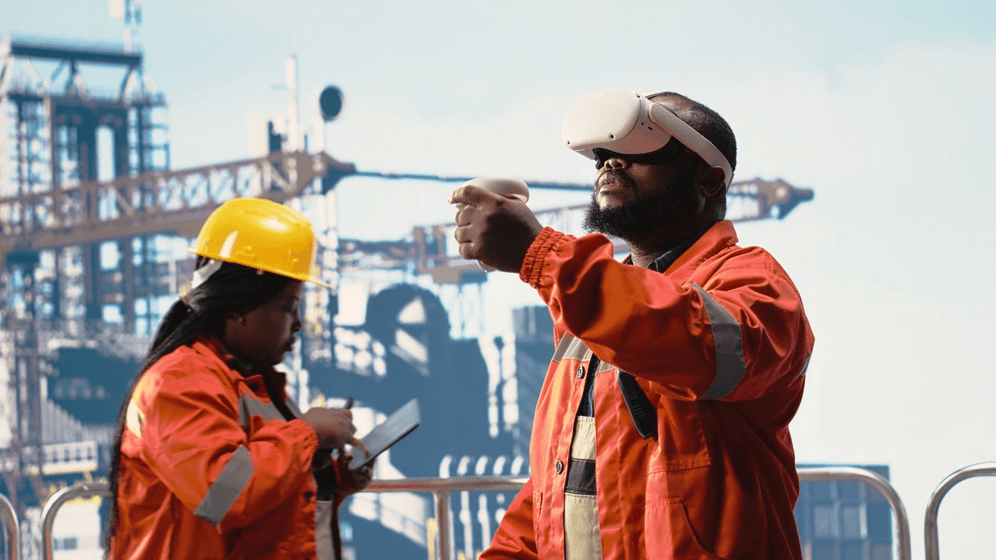
Virtual reality (VR) is changing how high-risk sectors, such as oil and gas, approach training. It offers a safer, cheaper, and easily expanded way to train employees. The use of VR in oil and gas, allows staff to get practical experience without facing real dangers. This blog looks at the main uses, advantages, challenges, and suggested methods for using VR training throughout the oil and gas industry.
Introduction to VR in Oil & Gas
The oil and gas sector is one where mistakes can lead to big disasters. Typical training, like classes or shadowing others, often doesn't give workers a feel for real, stressful situations. Leveraging virtual reality oil and gas training makes realistic practice situations where people can learn important skills safely. If companies put together VR headsets, such as the Meta Quest 3 with content made for them, they can really improve how ready their workers are.
Adopting VR in oil and gas industry helps improve safety and meets compliance requirements. As VR gets better, leaders in the field see that it needs to be part of how they train and work.
Key Applications of VR in Oil & Gas
VR applications in oil and gas span from safety training to group work between people in different places. In all its use cases, how VR safety training works is evident in the reduction of hazards and enhancement of operations.
VR Safety Training for Oil & Gas Workers
Safety is key in the oil and gas business. Using virtual reality training in the oil and gas industry allows workers to practice handling fires, leaks, and equipment issues without any danger. By repeating these drills, they’re less likely to make errors when real problems occur. Studies show that companies using VR for safety training have seen lost-time injuries drop (Source).
VR for Maintenance and Inspection Operations
Maintenance teams that handle heavy machinery on offshore rigs or in refineries can gain lots of benefits from VR simulations. These simulations offer step-by-step training for tasks, such as inspections, equipment shutdowns, and repairs. When companies rely less on real equipment, they can greatly reduce downtime costs. This method also makes sure that workers know the processes well before they arrive at the actual work site.
VR in Drilling and Exploration
Oil drilling is tricky and needs to be done just right. Using VR in the oil and gas industry lets engineers and drillers see what's underground. They can also try out different drilling plans and practice stopping operations in an emergency. This cuts down on mistakes and helps people make better choices when exploring for oil.
VR for Onboarding & Upskilling Workers
The oil and gas sector faces high turnover and frequent onboarding needs. Virtual reality oil and gas training accelerates learning by immersing new hires in operational workflows from day one. Upskilling programs can also be delivered at scale, enabling workers to learn new equipment or processes without interrupting ongoing production.
VR for Virtual Site Tours & Remote Collaboration
Virtual site visits to refineries, pipelines, and offshore platforms are now feasible for international teams, regulators, and partners, eliminating the need for travel. Real-time walkthroughs, incident reviews, and change planning can be conducted through multi-user VR sessions that feature voice communication and annotation. This approach enhances communication between onshore engineering and offshore operations and speeds up coordination.
These applications show how VR changes safety, efficiency, and teamwork in the industry.
Benefits of Adopting VR in Oil & Gas
Integrating VR in oil and gas has clear, quantifiable benefits that extend past typical training results. Combining immersive learning with fact-based analysis allows firms to cut down on accidents, raise output, and bring more predictability to employee training. These pluses are relevant across the production, processing, and distribution stages of the business, elucidating the benefits of VR training.
Enhanced Safety and Risk Mitigation
Oil and gas sites have dangers like high-pressure setups, gases that catch fire easily, and tight work areas. VR safety lessons copy these settings so workers can learn safely. Staff can work on controlling wells or putting out fires until they know what to do. Practicing in VR helps them feel sure of themselves, cuts down on accidents, and helps the company follow safety rules. This steady attention to teaching how to avoid problems makes the company's safety practices stronger.
Cost Savings and Efficiency Gains
The financial impact of VR training is significant. Actual instruction on machines or plants often means stopping work, renting tools, or hiring outside teachers. With VR, these costs go away since the scenes are fake. As time passes, groups also save money on insurance payments, hiring because of less loss, and less stopped time tied to accidents. A study by PwC found that VR training can be more than 50% less costly than traditional training when used a lot (Source), making it a good choice for big businesses.
Improved Training Retention and Engagement
Typical lectures and handbooks do not often hold the attention of employees. VR training, on the other hand, involves many senses by bringing together images, sound, and interaction. Studies show that people remember as much as 80% of information delivered through VR after a year, compared to only 20% with classroom learning (Source). By allowing trainees to make choices, handle tools, and deal with crisis situations, oil and gas VR training builds both mental understanding and muscle memory, making sure that key steps are remembered when it matters.
Scalability & Accessibility
For oil and gas companies with operations around the world, it is important to have solutions that work for both offshore platforms and remote refineries. Cloud-based VR modules can be used anywhere, which will make sure the staff get the same training experience. Contractors, new staff, and experienced operators all get the same training, no matter where they are. This availability will close knowledge gaps across sites and accelerate global rollouts of new procedures.
Better Operational Insight
VR training gives objective data, unlike subjective trainer feedback in classrooms. It records every trainee action, such as opening a wrong valve or delaying an emergency response. Analytics dashboards show skills mastered, weaknesses, and individual or team readiness. These insights help refine training and show where risks are most likely, aiding operational planning.
These combined advantages explain why the oil and gas industry is fast moving VR from small tests to company-wide use.
Challenges and Limitations of Using VR in Oil & Gas
Businesses should carefully plan and select vendors when adopting VR to deal with possible cost, integration, and compliance issues. Give our blog on how to choose VR vendor a read, if you have questions on that front. There are some problems that need strategic planning. Many of these issues come from the industry's need for infrastructure and operations in harsh locations. If these limits are handled early, programs can give value and not become expensive tests.
High Upfront Cost and Technology Investment
For oil and gas companies, creating realistic virtual reality (VR) simulations requires investment in both hardware and software. Simulations designed for particular purposes, such as drilling training or refinery shutdowns, can be costly. Businesses might start with standard, pre-built VR training programs. As they gain experience with the tech, they can then move to more situation-specific content. This approach lets them see a faster return on their investment and spread out the costs over time.
Integration with Existing Systems and Infrastructure
Oil and gas firms already rely on Learning Management Systems (LMS), safety compliance tools, and enterprise IT systems. VR must integrate with these platforms to avoid duplication of effort. Providers with SCORM/xAPI compatibility and analytics dashboards are essential. Companies that fail to integrate VR with existing systems risk siloed data and reduced usability of training results.
VR Hardware & Connectivity in Remote or Offshore Environments
Offshore platforms and desert refineries usually have limited bandwidth, which can negatively affect cloud-based VR modules. Picking light, standalone devices, such as the Meta Quest 3, that work offline can help with these problems. Setting up secure physical areas for VR sessions that involve movement is also very important for using VR offshore.
Safety, Comfort, and Human Factors
It's worth noting that not all employees get used to immersive tech right away. Some may feel VR motion sickness or uncomfortable when using VR for a long time. To deal with this, companies should create shorter training sessions, use interaction methods that feel natural, and pick headsets that are comfortable to wear. By doing these things, companies can keep more people engaged and make the experience better for everyone.
Regulatory, Compliance, and Certification Issues
Oil and gas training should meet strict rules from groups like OSHA or ISO 45001. At first, rule makers might not want to approve virtual reality training. To fix this, companies can work with certifiers early and check if their VR scenarios meet the needed standards. Keeping records of results with built-in data tools also helps when it's time for audits.
By anticipating these limitations, oil and gas leaders can plan smoother VR rollouts and maximize adoption.
Best Practices for Implementing VR in Oil & Gas
Integrating VR in oil and gas, simply buying equipment isn't enough. A well-organized plan, measurable return on investment, and good change management are keys to moving beyond small tests to large-scale use. Here’s a guide to help you with the implementation.
Define Clear Use Cases & ROI Metrics
Companies should define their goals when implementing VR, such as fewer accidents, shorter training, or better maintenance. ROI can be measured by tracking things like fewer incidents, quicker training times, or less equipment downtime. Precise key performance indicators help make sure VR projects have real results instead of just being tech experiments.
Start Small, Pilot Programs
Starting small trials is useful to check if things are easy to use and if they work well before spending a lot of money. For instance, a refinery could start with a virtual reality module for fire evacuation before using it for equipment maintenance or drills for offshore evacuation. Trials give helpful user input and make leaders more confident.
Choose the Right Hardware & Platform
The appropriate device depends on the specific training requirements. For scalable and mobile training, standalone headsets such as the Meta Quest 3 are a good choice. For high-realism simulations, tethered devices may be more suitable. Businesses should consider cost, mobility, and graphics quality when choosing the best VR headsets for their situation.
Develop Realistic & Relevant Content Development
For VR training to be helpful in the oil and gas industry, it needs to accurately show what the job is like. Working with experts helps make sure the way workers handle tools, safety steps, and site designs are correct.
Training the Trainers & Change Management
For VR training to work, instructors must guide the sessions well. Training managers should learn to read data reports, handle user problems, and lead students through the program. To get employees to accept it, communicate changes early and get leaders to support the change.
Maintenance, Updates, Analytics & Feedback Loops
VR scenarios should be updated to reflect changes in industry rules and gear. Regular updates keep things relevant, and data dashboards can monitor how well things are progressing over time. By gathering feedback from both trainees and trainers, programs can be constantly improved. To make these procedures even better, organizations can follow proven methods when they look at the return on investment of virtual reality training.
This structured approach ensures that VR initiatives deliver sustainable business impact rather than one-off experiences.
Case Studies & Real-World Examples of VR in Oil & Gas
Case studies prove that using VR in oil and gas is not just a promising concept but a working solution delivering measurable outcomes. A leading offshore operator implemented VR helicopter evacuation drills, enabling crew members to rehearse emergency exits multiple times in a safe environment. The result was a 30% reduction in actual evacuation drill times and improved compliance with aviation safety standards (Source).
In another example, an energy company adopted VR-based turbine maintenance training. Engineers practiced disassembly and reassembly in a simulated refinery before attempting the task on real turbines. This preparation improved task completion time by 25% and significantly lowered equipment downtime (Source).
AutoVRse has partnered with oil and gas businesses worldwide to provide VR training on protective gear, dangerous places, and fire safety. These programs were used in many locations, which made sure training was consistent and compliance was checked. VR helps companies lower accident rates, standardize employee skills, and increase how well they work.
These examples show that using VR in oil and gas operations leads to safer work habits, quicker employee training, and better compliance with regulations.
Emerging Trends & Future of VR in Oil & Gas
Over the next ten years, VR in oil and gas will likely become a key tool for complete operational improvement. Developments in VR tech, connectivity, and artificial intelligence are apt to change how firms handle their staff, procedures, and equipment.
Integration with AR, MR, XR & IoT
The convergence of virtual reality, augmented reality, and mixed reality creates a spectrum of extended reality solutions for oil and gas. For example, field engineers can use smart glasses for AR-assisted inspections paired with VR-based training, elucidating the AR vs. VR benefits. When used with IoT sensors in rigs and pipelines, these tools give real-time data overlays that help technicians and lower the chances of mistakes. To see how extended reality impacts business around the world, look into other resources.
AI-enhanced VR
Artificial intelligence enhances the adaptability of VR training modules. AI adjusts training scenarios based on how each person learns, using data from their actions and how well they do. For instance, if someone has trouble with a valve shutdown, the system can offer more practice or immediate help. This way, everyone can become skilled more quickly and feel more sure of themselves.
Use of Digital Twins & VR for Predictive Operations
Digital twin technology is gaining ground in oil and gas, allowing companies to create virtual replicas of pipelines, refineries, or offshore rigs. When paired with VR, these models enable predictive simulations of failures, maintenance schedules, and emergency scenarios. Operators can test “what-if” cases virtually, reducing downtime and improving equipment longevity. The integration of VR with digital twins creates a continuous loop between training and real-world operations.
5G and Edge Computing Improving Remote/Real-time VR
Many oil and gas sites are located in remote regions with limited connectivity. The rollout of 5G networks and edge computing promises low-latency, high-bandwidth connections even in offshore environments. This allows real-time VR collaboration between onshore experts and offshore workers, enabling immediate troubleshooting, faster approvals, and improved coordination without costly travel delays.
Sustainability & VR to Reduce Carbon Footprint
Sustainability is no longer optional for energy companies. Virtual site tours and remote VR collaboration can drastically reduce the need for travel, lowering carbon emissions. By replacing traditional inspection visits with VR walkthroughs, companies align with global ESG commitments while maintaining operational visibility. Beyond reducing emissions, VR helps design safer, cleaner workflows by enabling pre-visualization of refinery layouts and safety protocols before implementation.
Together, these trends show that VR in oil and gas will evolve beyond training to become a strategic enabler of safer, smarter, and more sustainable operations.
How to Measure the Value of Using VR in Oil & Gas
Measuring ROI requires tracking both quantitative and qualitative outcomes through a thorough VR training ROI analysis. Metrics include reduced safety incidents, training time saved, operational uptime, and workforce feedback. Comparing VR training vs traditional training provides data-backed clarity on how immersive methods deliver superior retention, engagement, and cost efficiency.
Conclusion
VR in oil and gas is no longer experimental—it is a proven enabler of safer, faster, and more cost-effective workforce development. From immersive safety drills to predictive operations, the technology addresses the sector’s most critical challenges while supporting long-term resilience. With careful planning and strategic investment, oil and gas leaders can transform how their employees learn, collaborate, and perform.